Chicken Road Strategies — Can You Really Play with a Strategy?

Chicken Road is a crash-style step game, and it naturally makes people think about strategy. You choose the bet, pick the difficulty, decide when to move forward, and when to cash out. That means different playing styles do exist.
But let’s be clear from the start: no Chicken Road strategy can guarantee a win. Outcomes are still random. Your decisions matter for risk, not for certainty on the next step.
What Chicken Road does give you is a set of tools. You can change difficulty, manage bet size, stop early, push for a higher multiplier, and test approaches in demo mode. When players combine these options, they call it a strategy.
Below are the most common Chicken Road strategies players use. Some are careful, some are risky, and some should be tested in demo before you use real money. Treat every strategy as a way to manage risk — not as a magic system.
How strategy works in Chicken Road
A strategy is not one single button. You won’t get far by only changing the bet size or only switching difficulty. The real strategy starts when you combine several choices into one plan.
Most players build their approach around:
- bet size;
- selected difficulty;
- how many steps you aim for before cash out;
- a session budget (money and time);
- rules for stopping after a win or after a loss.
Each choice changes the feel of a round. A small bet gives more room to test. Higher difficulty increases risk faster. Early cash out is safer. Going further can look tempting.

That is why it makes sense to test combinations first. Our demo is a good place for that. Try Easy with early cash out, Medium with a few extra steps, or Hardcore with small virtual bets just to feel how aggressive the game becomes.
Do not lock yourself into one pattern too quickly. Chicken Road rewards discipline more than bravado. A strategy will not beat randomness — it simply helps you avoid playing on autopilot.
Conservative strategy (low risk)
If you are new, the safest way to start is simple: Easy mode, small bets, and no chasing huge multipliers in the first sessions.
The plan is straightforward. Place a bet, take a few safe steps, and cash out after about 3–4 moves. The multiplier won’t look spectacular, but the goal is to learn the rhythm without burning your balance fast.
The downside is obvious: small cash outs mean small wins. The upside is control — and control matters most while you learn how you react to risk.
Balanced strategy (medium risk)
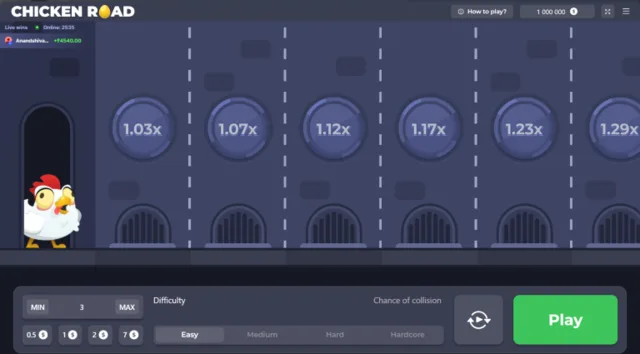
When the mechanics feel familiar, Medium mode is the next step. It already changes the pace and the pressure without forcing you into all-in risk.
Pick a normal bet you are comfortable losing. On Medium, even short runs can feel more rewarding because the multiplier grows faster than on Easy.
Use the pause between moves. Look at the current multiplier, think about your target, and decide the next step only if it still matches your plan.
This is the most popular style for many players: it’s not boring, but it’s also not as punishing as Hard or Hardcore. Still, “balanced” does not mean safe — you can lose here too.
Aggressive strategy (high risk)
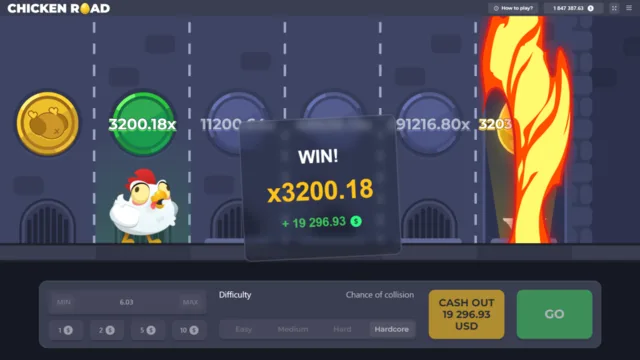
Hard and Hardcore are a different story. These modes are not for learning the basics. They are for players who understand the risk and accept that the balance can disappear quickly.
There are two common aggressive approaches:
- Micro-bet deep runs: use small bets and try to go further, giving yourself more attempts.
- Bigger bet, early exit: use a larger stake but cash out after 1–2 safe steps.
For beginners, Hard/Hardcore are not recommended. In these modes one extra step can wipe the whole bet. If you notice you’re forcing rounds or trying to win everything back, step down immediately.
Test strategies in demo first
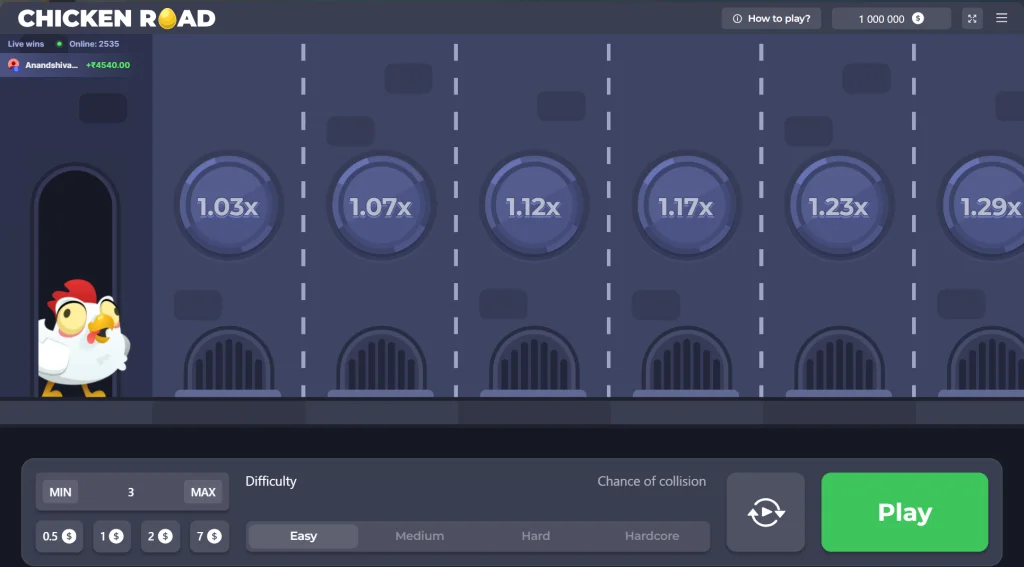
Before you use any strategy with real money, try it in demo. Demo is the safest place to see how your plan feels when you’re actually inside the round.
In demo you get the original Chicken Road gameplay with a virtual balance. You can lose it, restart, change difficulty, and test again — without touching your real funds.
Use demo to compare styles. Conservative on Easy, balanced on Medium, and aggressive on Hard/Hardcore with tiny virtual bets. You’ll quickly learn what fits your risk level and what burns the balance too fast.
Common mistakes
1) Chasing high multipliers without a plan
The classic trap: you get a few safe steps, the multiplier looks good, and you keep going because it feels right. Better approach: decide your target before the round starts.
2) Trying to beat the system
There is no trick that bypasses Chicken Road. Increasing the bet does not “reset” randomness. It only changes how much you win or lose.
3) Chasing losses
Trying to win back losses is emotion, not strategy. Stick to your plan and stop when the session limit is reached.
4) Moving to Hard/Hardcore too early
Higher multipliers are attractive — that’s why new players jump too soon. Those modes are not “better”; they are simply riskier.
5) Believing in patterns
Chicken Road is RNG-driven. A streak does not create a safe path. Avoid superstition like “now it must be safe” or “the game owes me a win”.
6) Playing without limits
Set two limits before you start: a money budget and a time budget. When either limit is reached — stop.
Bankroll management
Bankroll management is the boring part, but without it every strategy falls apart. Decide what you can spend for the whole session — and what you can lose without stress.
Keep each bet small compared to your balance. Avoid raising stakes out of anger after a loss. If you reach your target profit, take it.
- choose a session budget before playing;
- keep each bet small relative to your balance;
- stop when the budget is gone;
- do not increase stakes on emotions;
- take profit when you hit your target.
Difficulty and strategy table
| Difficulty | Risk level | Strategy style | Best for |
|---|---|---|---|
| Easy | Low | Early cash out | Beginners |
| Medium | Moderate | Balanced play | Regular players |
| Hard | High | Small bets, higher targets | Risk-takers |
| Hardcore | Very high | Micro bets only | Experienced players |
Is there a 100% winning strategy?
No. You can play smarter, but you cannot know the next step in advance. Any site or app promising guaranteed wins is a red flag.
Play for fun, set limits, and treat every “system” as risk management — not income.
Responsible play
Chicken Road can pull you in: one safe step, then another, then stopping feels harder than it should. Real money makes the pressure stronger.
If you notice anxiety, chasing losses, or raising stakes to “fix” a round, stop. The best session is the one you can end without regret.
FAQ
What is the best Chicken Road strategy?
Start simple: Easy mode, small bets, early cash out. Then test Medium in demo once the mechanics feel clear.
Is Easy mode safer?
It is the best place to learn because the risk grows slower than on higher modes.
Can I win with a strategy?
You can win individual rounds, but no strategy guarantees profit.
Should I use Hardcore mode?
Only if you understand the risk. For most beginners it’s better to avoid Hardcore.
Can I test strategies in demo?
Yes. Demo lets you try Easy, Medium, Hard and Hardcore with a virtual balance.
When should I cash out?
There is no perfect number. Conservative players often exit after 2–4 safe steps. Decide your target before the round starts.
Is Chicken Road predictable?
No. RNG means you cannot know what happens on the next step.
Are “predictor” apps worth using?
No. Avoid them. Most are empty promises, and some are unsafe.
How much should I bet per round?
Keep it small relative to your balance so you have enough rounds to play and stay in control.