
From Frogger to Chicken Road: How Crossing Games Became a Casino Format
Chicken Road did not appear from nowhere. The game looks simple at first, but this format has a much longer history than most casino players think. Before Chicken Road became popular in online casinos, crossing games had already spent decades training players to understand one basic idea that worth the risk. That is why Chicken Road feels so familiar even to people who open it for the first time. The rules are new in a gambling context, but the visual logic is old. Roads, obstacles, short reactions, small decisions, quick failure, instant restart - all of this existed long before casino studios turned the concept into a real-money game.
The Arcade Roots: Frogger and the First Crossing Formula
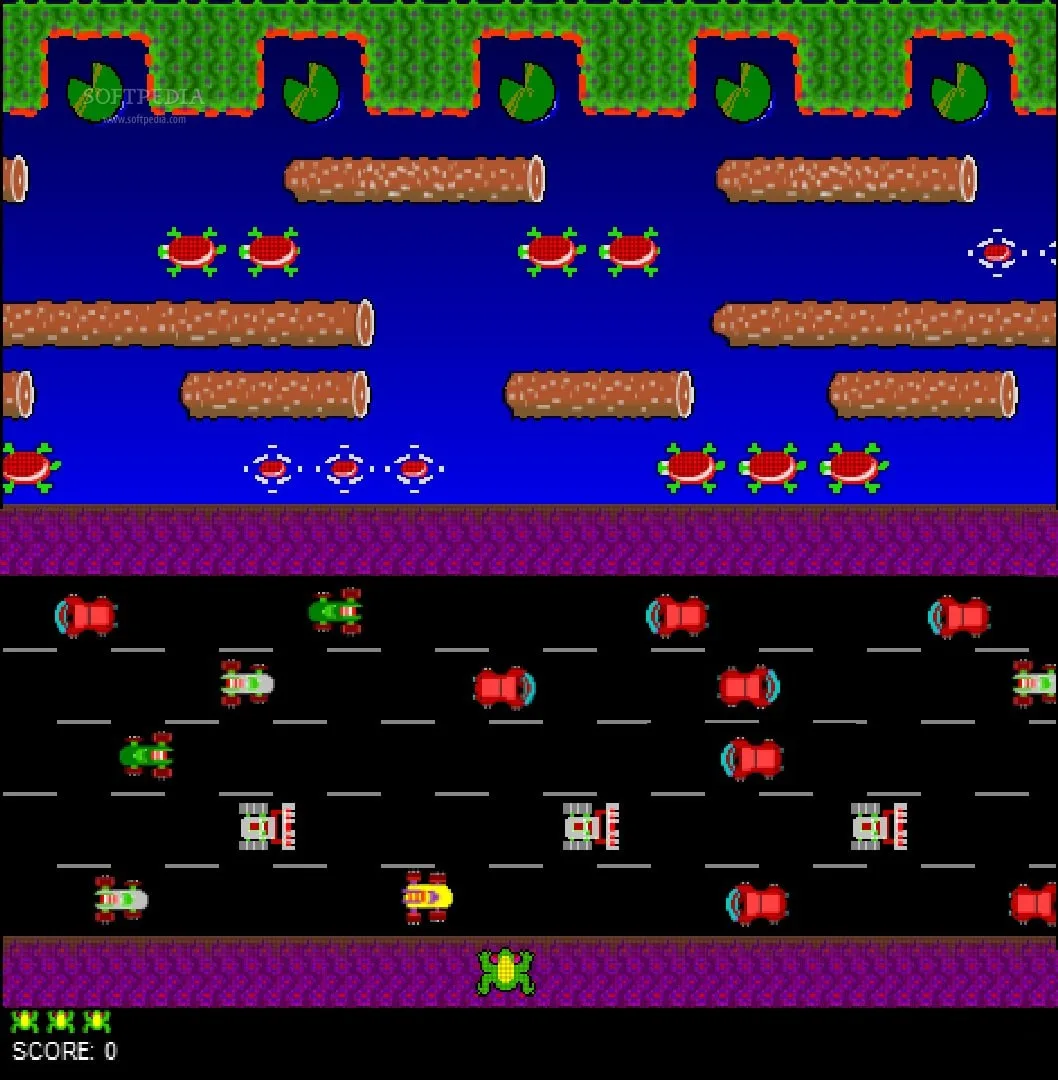
Frogger worked because anyone could understand it in a few seconds. There was a frog, a busy road, a river, and a simple goal - get across without making a bad move. The tension came from timing, not from complicated rules. One wrong step, one late move, and the round was over. That clear visual pressure later became the base for many crossing-style games. Frogger gave the genre its foundation. The screen was easy to read. The goal was obvious. Every step mattered. The player did not need a long tutorial because the situation explained itself: cross safely or lose.
That structure is still visible in modern Chicken Road games. The player moves through a risky path and each new step creates a stronger feeling of pressure. The game is not complicated, but it constantly risky. A player usually loses not because the rules are unclear, but because they try to go a little further. That tiny "one more move" feeling became the heart of many later arcade and casino formats. That is the most important emotional loops in this type of game.
Why Simple Crossing Games Worked So Well
The crossing format survived for decades because it is extremely easy to understand. You do not need deep gaming expertise. You see a road, hazards and a goal. The brain reads the situation immediately. That is why this structure works fine for generations of games. Different setting, but the core feeling remains the same.
The common things in similar games:
- The player understands the risk visually.
- The round does not take long.
- Every step feels like progress.
- Failure is fast and obvious.
- The player feels responsible for stopping or continuing.
Chicken Road borrows from the same old arcade instinct, but changes the purpose of the run. In classic crossing games, the player tries to survive for longer or reach a new score. In Chicken Road, the focus moves to timing. The road becomes a gambling space: each move makes the result more attractive, but also harder to leave emotionally.
Crossy Road and the Mobile Reinvention
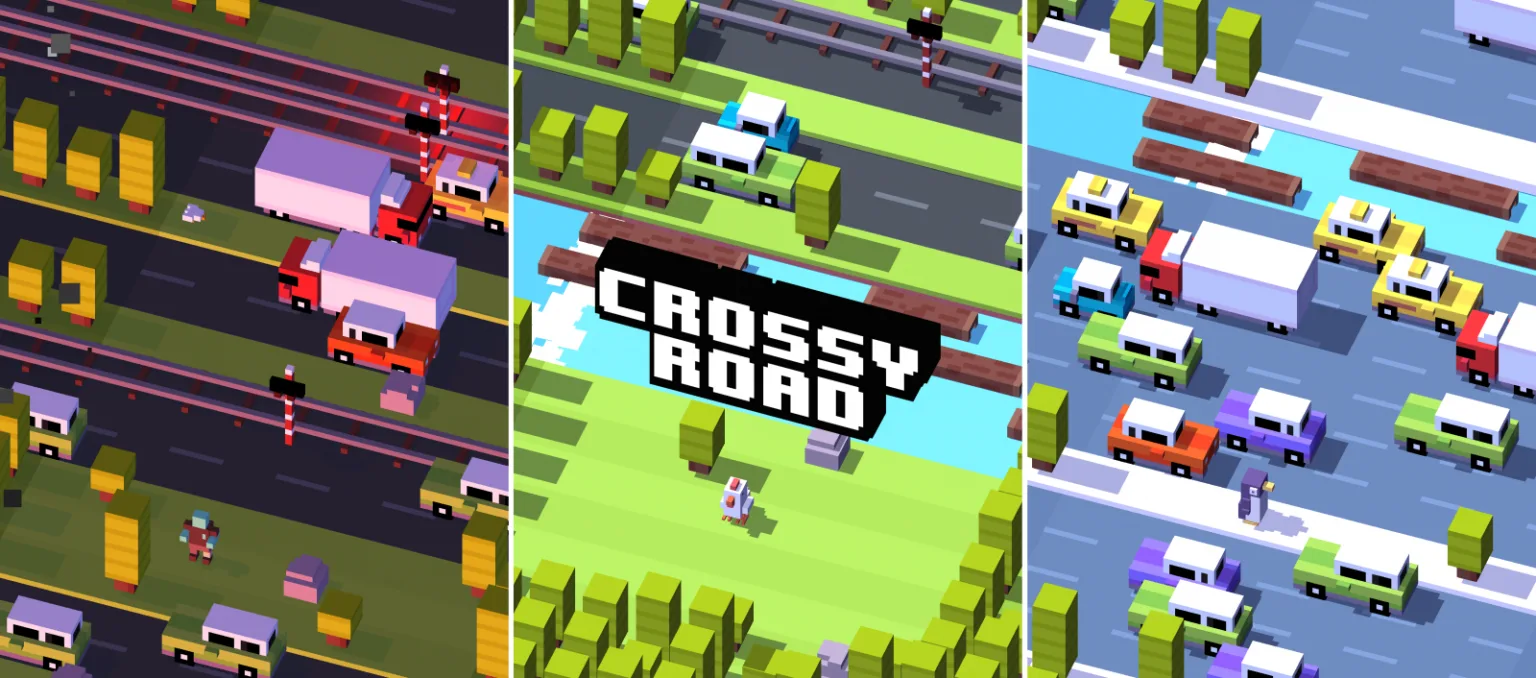
Crossy Road brought the crossing idea back into mass culture. In 2014 it took a familiar arcade pattern and made it feel completely natural on a phone. But it was not a casino product. It was a casual mobile game, built for short sessions, fast restarts, and simple tap controls. But its success proved that the old crossing formula still worked. Players did not need a joystick, a long tutorial, or a serious story. A road, a character, a few hazards, and instant reaction were enough. It also changed how people perceived this type of game. Crossing mechanics no longer felt like something from old arcade cabinets. They became part of mobile gaming culture: quick to open, easy to repeat, and clear even on a small screen.
That matters when looking at Chicken Road. Casino players today are also mobile users. They expect games that load fast, fit vertically, and make sense in a few seconds. Chicken Road follows that same rhythm. It does not fight the phone screen; it works with it. The chicken image also helped the format stay light. A nervous little bird crossing danger feels funny before it feels serious. For casino games, that contrast is useful. The real-money layer creates risk, but the arcade presentation keeps the game approachable and less heavy than traditional gambling themes.
How Casino Games Changed the Formula
When casino developers adopted crossing-style mechanics, they changed the goal.
- In Frogger, the goal was survival.
- In Crossy Road, the goal was distance and score.
- In Chicken Road, the goal is timing.
That is the big difference. The player is not only trying to move forward. The player is trying to leave the round at the right moment. This cash-out idea turns a simple arcade action into a gambling decision. The longer the player stays, the more tempting the result becomes. But waiting too long can end the round badly. That creates a strong risk-versus-reward loop without needing a complex slot system. Chicken Road is not a classic slot. It does not rely on reels, paylines, or symbol combinations. It feels closer to an instant casino game with arcade visuals. The player sees progress directly, which makes the result feel more personal than in many traditional casino games.
Chicken Road by InOut Games
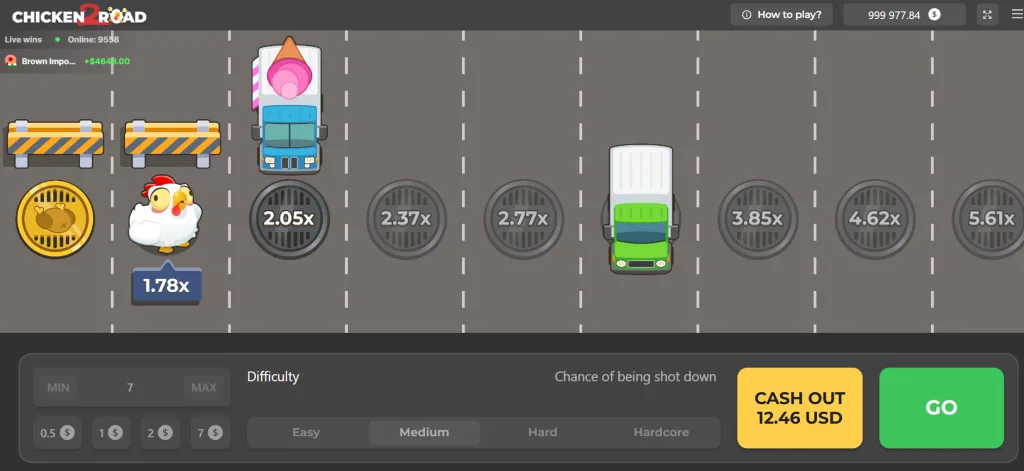
The modern Chicken Road format is strongly connected with InOut Games, the provider behind the original Chicken Road title. The game became recognizable because it took an old arcade idea and rebuilt it for casino play. The design is simple on purpose. A chicken crosses the road, the multiplier grows, and the player decides when to stop. That is enough. The game does not need a heavy bonus structure or cinematic effects because the tension comes from the player's own decision. This is why Chicken Road became easy to promote and easy to understand. By one screenshot player can understand the basic mood. It is funny, fast and risky.
InOut Games also helped turn the format into a wider series. After the first Chicken Road became recognizable, the format naturally started growing around it. Players were no longer looking only for the basic road-crossing game - they wanted new versions with a different mood, faster rhythm, brighter visuals, or extra bonus elements. That is how the Chicken Road series turned into more than one title. Some releases keep the original idea almost untouched and mainly change the setting. Others feel more energetic or add bonus-style features for players who already know the base game and want something less plain. The important part is that these versions do not break the identity of Chicken Road. The chicken, the road, the rising pressure, and the stop-or-continue decision are still there. The difference is in presentation: one version may feel more classic, another more casino-themed, another more dynamic.
Why the Format Works So Well in Online Casinos
Chicken Road works because it gives players a feeling of control. In many casino games, the player presses spin and waits. In Chicken Road, the player feels more involved because they decide when to stop. That does not remove the risk and real-money play can lead to losses. The game also fits modern casino habits. Many players no longer want long sessions only. They want quick games, mobile access, simple visuals, and fast results. Chicken Road gives them exactly that.
There is also a strong psychological reason behind its popularity. Each round is short, but it creates a clear emotional curve:
- first, the player feels safe;
- then the multiplier becomes more attractive;
- then the next step starts to feel dangerous;
- then the player either leaves or risks more.
That loop is easy to repeat, which is why the format can be so engaging.
The Role of Demo Mode
Another reason Chicken Road spread quickly is demo mode. Players can test the game without real balance, understand the pace, and see how the cash-out logic feels. For a game like Chicken Road, demo is especially useful because the rules are better felt than explained. You can describe the mechanics in a paragraph, but the pressure of "one more step" only becomes clear when the player opens the game. Demo also helps casinos introduce the game to new users. A player who might ignore a traditional slot can still try Chicken Road because it looks light and simple.
From Arcade Skill to Casino Timing
The evolution from Frogger to Chicken Road shows how game design changes with the platform.
- Arcade games were built around skill and survival.
- Mobile games were built for short sessions and repeat play.
- Casino versions are built based on timing and multipliers.
Chicken Road sits at the end of that evolution. It keeps the visual simplicity of old crossing games, the mobile-friendly rhythm of casual games, and the risk structure of modern instant casino titles.
That explains why the game became popular. It is not a traditional like slot, but it also not a familiar arcade game. The casino version simply adds money decisions to a format people already recognize.
Summary
Because of the familiarity with arcade games, players already understand the basic language of this type of game: a character moves forward, danger increases, and every next step feels more expensive emotionally. Frogger made this structure famous in arcades. Crossy Road later proved that the same idea could work perfectly on mobile. Chicken Road took that familiar crossing rhythm and changed the goal: now the question is not only "how far can I go?", but "when should I stop?" That small shift is what makes the casino version work. The game is visual, fast, and easy to read, but it still creates pressure. There are no reels to wait for and no complicated bonus table to study. The whole round is built around one clear decision. For players, this makes Chicken Road feel more active than many standard casino games. For operators, it is a strong format because it sits between arcade entertainment and instant gambling: lighter than a slot, but more engaging than a simple click-and-result game. That is why the format continues to spread. Chicken Road did not invent crossing games from scratch. It took a mechanic people already understood and turned it into a modern casino experience built for short sessions, mobile screens, and quick decisions. The chicken may look funny, but the format behind it is serious game design. It took more than forty years for crossing games to move from arcade cabinets to mobile phones and then into online casinos. Chicken Road is one of the clearest examples of that evolution.
FAQ
Who created Chicken Road?
Chicken Road is connected with InOut Games, the studio behind the original casino version. The game took a familiar crossing-game idea and rebuilt it around multipliers, short rounds, and cash-out timing.
Is Chicken Road based on Frogger?
Not directly in an official sense. It is better to say that Chicken Road belongs to the same wider crossing-game tradition. Frogger helped make the "cross the road and avoid danger" format famous, but Chicken Road is a separate casino game with its own gambling mechanics.
What does Crossy Road have to do with Chicken Road?
Crossy Road showed that simple crossing mechanics still work perfectly on mobile. It made the format feel modern again: short sessions, tap controls, fast restarts, and a funny chicken character. Chicken Road uses a different casino model, but the mobile-friendly feeling is easy to compare.
Is Chicken Road a slot?
Chicken Road does not use reels, paylines, or symbol combinations. It is closer to an instant arcade-style casino game.
Why did Chicken Road become popular?
Because it is easy to understand without feeling empty. The player sees the action clearly, the rounds are short, and every move creates pressure. It feels more active than a normal spin-based game.
What is the main idea of Chicken Road?
The player follows a chicken moving forward while the potential payout grows. The key decision is when to stop. Leave too early, and the result may feel small. Wait too long, and the round can end badly.
Why do casinos like Chicken Road-style games?
They fit modern casino habits. Players want fast games, mobile access, simple visuals, and quick results. Chicken Road gives all of that without looking like another standard slot.
Is Chicken Road only popular because of gambling?
Not exactly. Crossing games worked in arcades and mobile apps because they are simple, visual, and easy to repeat.
What changed when crossing games became casino games?
The goal changed. In older arcade games, players wanted to survive longer or beat a score. In Chicken Road, the focus is timing the exit. The multiplier turns each step into a money decision.
Why does Chicken Road work well on mobile?
The game does not need a large screen or complicated controls. It is visual, compact, and quick to read. That makes it comfortable for mobile casino players who prefer short sessions.