
Chicken Road Gold

Chicken Road Gold feels like the original game moved into old London. Same step-by-step risk, same cash out decision, but the setting is different: cobblestones, gas lamps, vintage cars, and a darker golden style around the road. The theme gives the game more character without making the mechanics harder to understand.
You choose a stake, start the run, and move forward tile by tile. Every safe step pushes the multiplier higher. It can start from around 1.01x and grow into much stronger values if the run goes deep enough. But the rule stays the same: one bad tile ends everything. If you cash out in time, you keep the current multiplier.
Chicken Road Gold is a good fit for players who like the original Chicken Road idea, but want a more atmospheric version. Less bright arcade chaos, more old-city style. Still fast, still risky, and still built around that simple question: take the win now or try one more step?
New Vintage London Theme
Chicken Road Gold feels like the chicken took a wrong turn and ended up in old London. Same step-by-step risk, same cash out pressure, but now the road has a different mood: cobblestones, classic cars, red phone booths, gas lamps, and a gentleman-looking chicken leading the run.
The theme gives the game more character than the original. It is not just another road with cars passing by. The whole thing feels like a quick dash through a vintage city street, where every next tile can either push the multiplier higher or end the round.
Chicken Road Gold Difficulty Levels
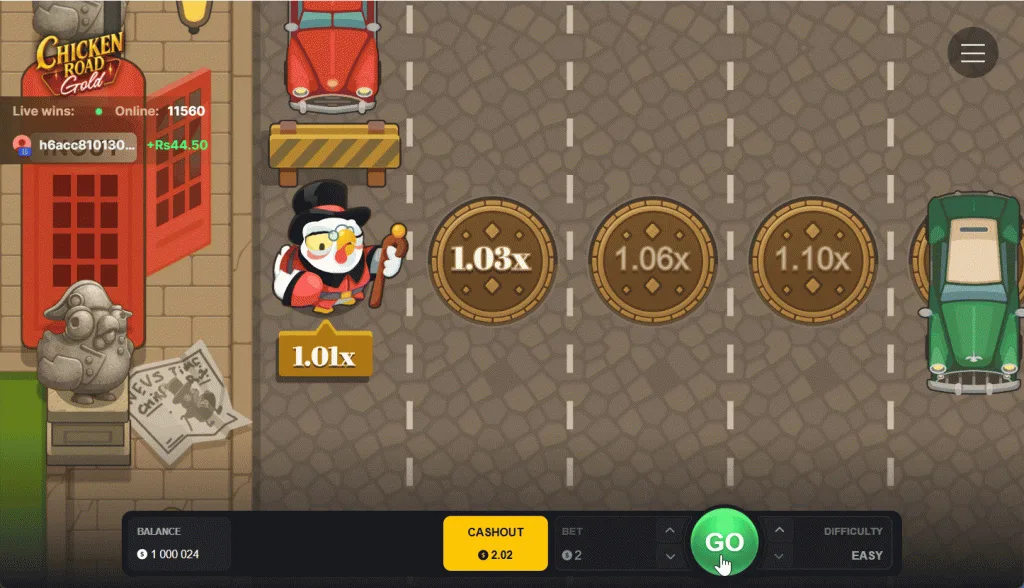
Chicken Road Gold has four difficulty levels. They change the road length, the pressure from cars, and how fast the multipliers grow.
| Mode | Road Lines |
|---|---|
| Easy | 30 |
| Medium | 25 |
| Hard | 22 |
| Hardcore | 18 |
Easy — 30 road lines
Easy is the best place to start. The road is longer, the traps feel lighter, and the game gives more room to understand the rhythm.
Multipliers grow slowly, but that is the point. You can test the game, try different bet sizes, and get used to cash out without putting too much pressure on the balance.
Medium — 25 road lines
Medium feels tighter. Cars appear more often, flame traps become harder to ignore, and the multiplier starts moving faster.
This is the balanced option. Good for players who already understand the basics and want more action without going straight into heavy risk.
Hard — 22 road lines
Hard makes the London street much less forgiving. Fewer lines, faster danger, and a sharper multiplier curve.
This mode can be interesting for players who want stronger payouts, but it is not a place for random clicking. Before starting, it is better to know where you plan to cash out.
Hardcore — 18 road lines
Hardcore is the shortest and riskiest route. The road gives almost no room for mistakes, and bad runs can end very quickly.
The multiplier potential is higher here, but so is the chance of losing the stake. This mode is only for players who understand the volatility and are ready for fast losses.
Chicken Road Gold Demo

The Chicken Road Gold demo is the best place to test the game before using real money. You get the same Vintage London road, the same difficulty modes, and the same cash out pressure — just with virtual credits instead of your own balance. Try the long Easy route, switch to Medium, or push a few Hardcore runs just to see how quickly the game can turn.
This is useful because every mode feels different. Easy gives more room to breathe. Medium is tighter. Hard and Hardcore can burn the demo balance fast, even when the money is not real.
The demo is not a cut-down version. It follows the same game logic, timing, and multiplier behavior as the real-money mode. The only difference is that you are not risking actual funds.
Use it to check:
- how the London road feels;
- how each difficulty changes the pace;
- when cash out starts to feel safer;
- how quickly the risk grows;
- whether Chicken Road Gold fits your style.
Demo mode will not give you a guaranteed strategy. But it helps you understand the game without paying for every mistake.
FAQ
Does the London theme change the game?
No. The London theme changes the look, not the math. Cobblestone streets, old cars, red phone booths, lamps — all of that gives Chicken Road Gold its own style. But the odds, multiplier curve, and risk logic do not become different just because the game looks like 1930s London.
Does cash out work on mobile?
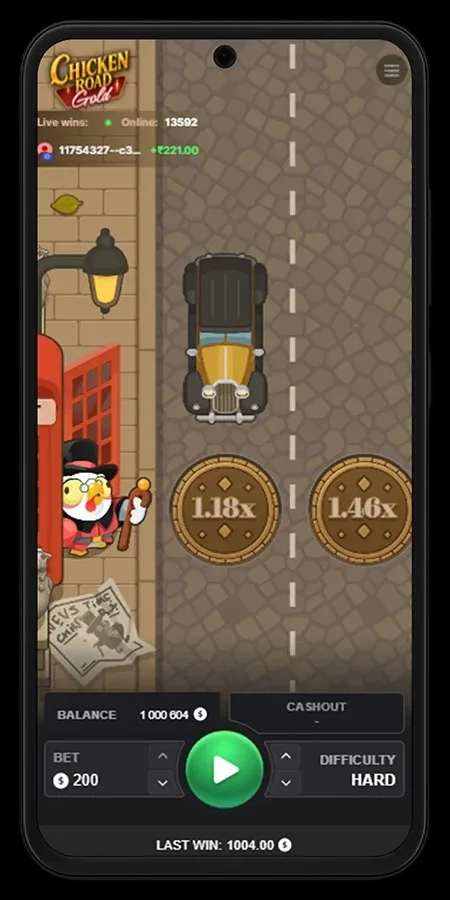
Yes. On mobile, cash out works with a single tap. The game is made to fit smaller screens, so the main buttons stay close and easy to use. Still, check your internet connection. A weak signal will not change the result, but it can make the screen feel slower.
Can I test all modes in demo?
Yes. The demo includes Easy, Medium, Hard, and Hardcore. That is the best place to compare the modes. Try the long Easy road first, then switch to harder levels and see how much faster the pressure builds.
Can I play Chicken Road Gold on Android or iPhone?
Yes. Chicken Road Gold works through modern mobile browsers on Android and iOS. Open it in the browser and play from there.
Is Chicken Road Gold provably fair?
Yes, the game can use provably fair mechanics, depending on the version and operator. The standard RTP profile is usually around 98%, but some markets may use different approved RTP settings. Always check the game info panel before playing for real money.
Does Chicken Road Gold keep players longer than the classic version?
It can. The Vintage London atmosphere can make sessions feel longer and more immersive, but longer play also means more risk, so limits still matter.
Are languages and currencies supported?
Yes. Chicken Road Gold can support different languages, regional formats, and multiple currencies depending on the casino platform. For players, the final language and currency usually follow the site or account settings.
Can operators add their logo?
Yes. Operator branding can be added inside the game interface if the platform enables that option.
Can the max win cap be changed?
Yes. The default cap is often around $20,000, but operators may request different limits depending on jurisdiction, risk settings, and market rules.